

 Validating the Mobil-Aider to Measure Joint Accessory Motion in Healthy Adult Shoulders
Sharing an excellent publication from colleagues Dr. Tuzson & Dr. Tarleton
Published in Open J Health Sci Med 2(1): 106.
 Abstract
Purpose: The purpose of this project was to validate, in vivo, a device designed to measure joint accessory motion magnitude by comparing Mobil-Aider device measurements with measurements obtained from an Ascension electromagnetic motion analysis system.
Subjects: 20 healthy adults: 16 female and 4 male (27.5 yo ± 7.1)
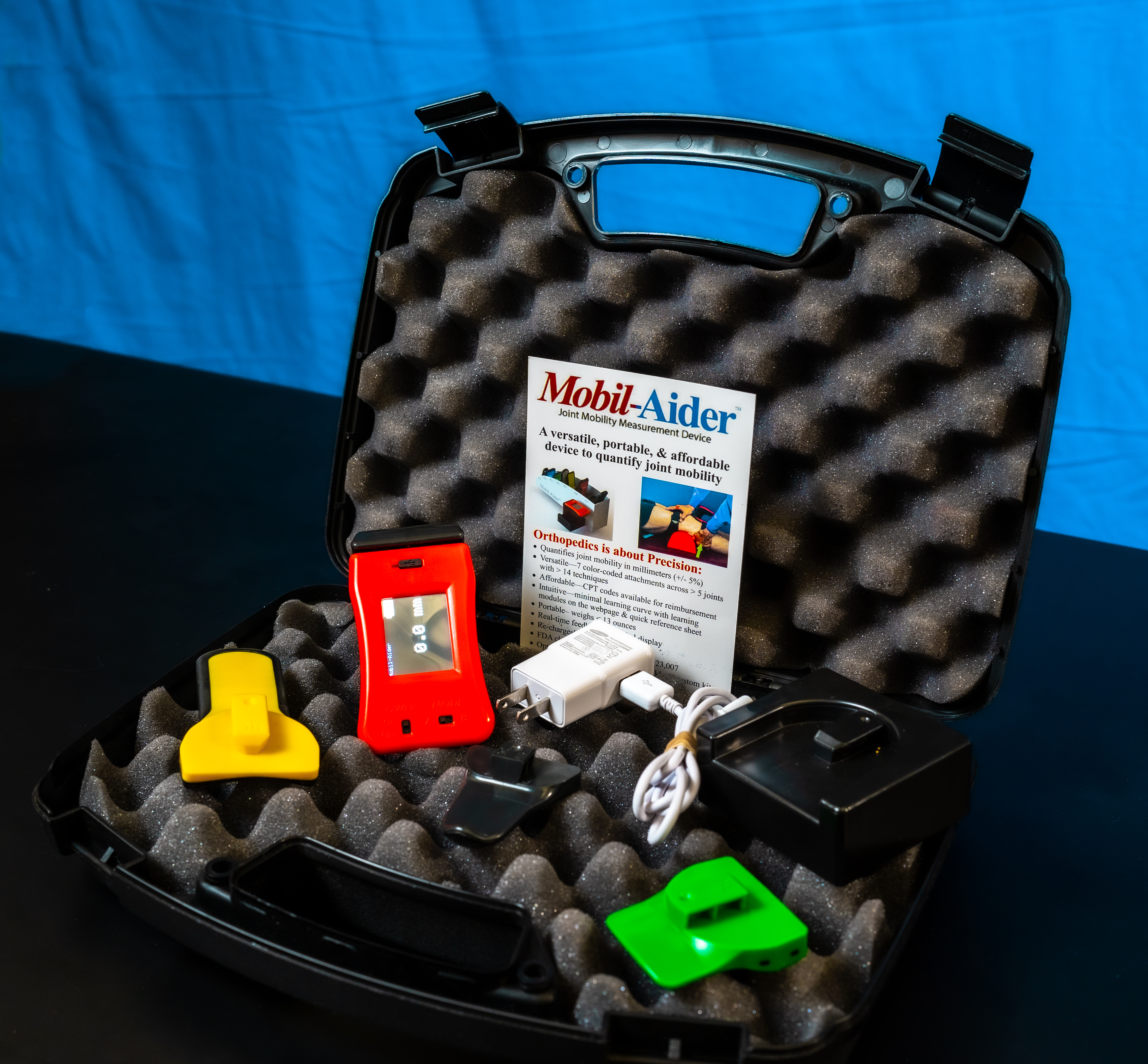
Materials/Methods: The Mobil-Aider device was developed to provide an accurate measurement of joint accessory motion. Two Ascension markers were placed on each arm of the Mobil-Aider device and two additional markers were placed over the left clavicle and the left humerus of each participant. The markers placed over the clavicle and the humerus approximated the measurement of the humerus relative to the clavicle during the posterior glide glenohumeral joint mobilizations. One orthopedic clinical specialist performed 10 posterior glides (grade IV) of the left humeral head in 20 healthy adults. The magnitude of joint accessory motion was measured simultaneously by the Mobil-Aider device and the Ascension electromagnetic system markers.
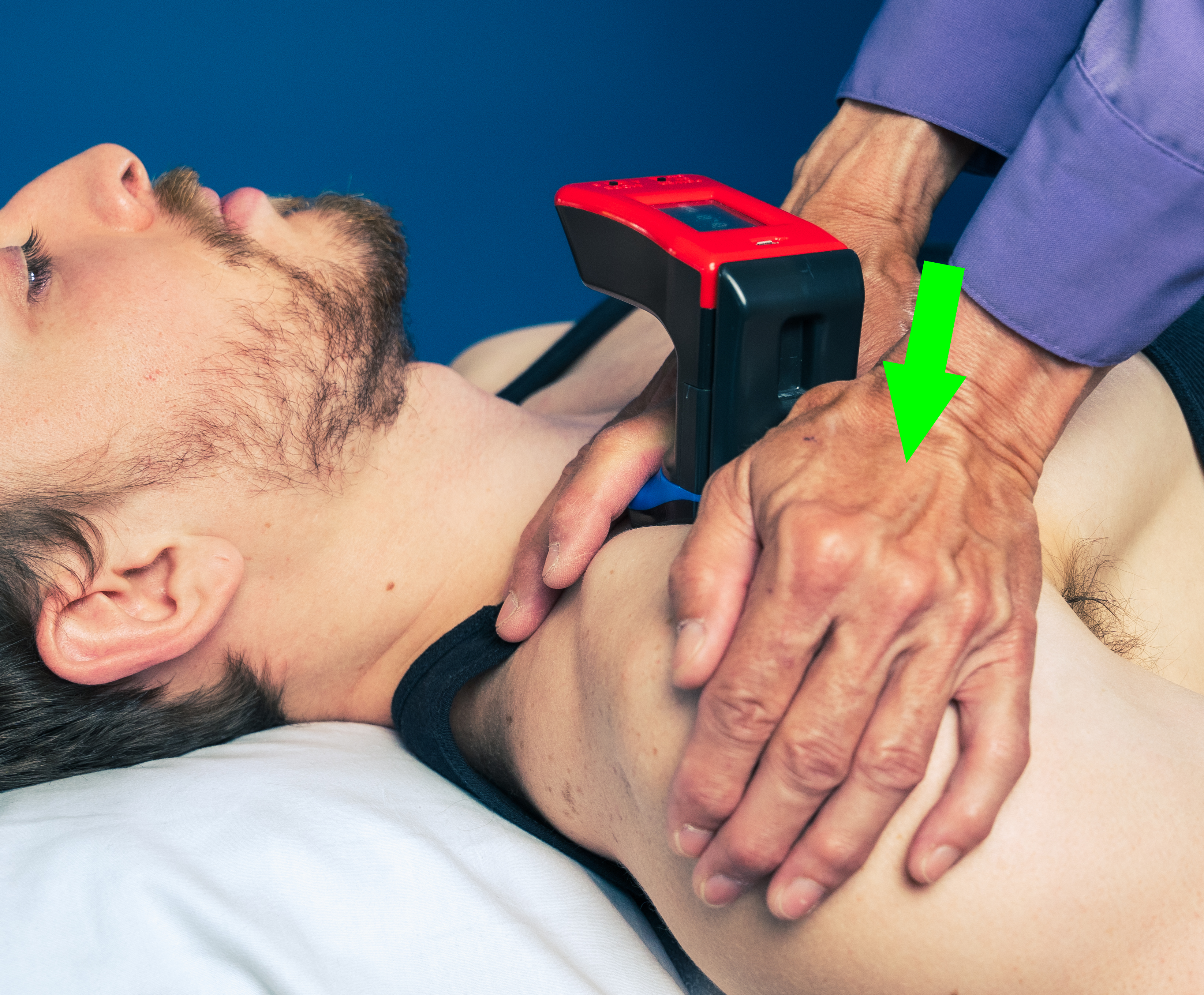 Results: The Mobil-Aider device measures correlated closely with the measurements obtained from the Ascension markers mounted on the arms of the Mobil Aider device (r = 0.83). On average, the electromagnetic system measured Mobil-Aider device movement of 18 mm (± 3 mm). The Mobil-Aider demonstrated an average movement distance of 10.5 mm (± 2.3 mm) and the clavicle-humerus markers demonstrated an average movement distance of 5.3 mm (± 3.5 mm).
Conclusions: The values obtained using the electromagnetic motion analysis system and the Mobil- Aider device showed close agreement in measuring posterior humeral glide motion of healthy adult shoulders. Radiographic imaging or invasive measures might provide a more accurate measurement of the magnitude of joint mobilization movement, but those methods bring an increased risk to the research participants.
Clinical relevance: Given the challenge of precisely measuring joint mobilization magnitude in the clinic, the Mobil-Aider provides an accurate, practical non-invasive measure of humeral head accessory motion in healthy adult human shoulders.
Coding tip: Physical Therapists & Physicians can use 97750 to bill for joint mobility testing. However, the 97750 code cannot be used with an examination/evaluations code. What about all the post-op visits? Assessing joint mobility and/or laxity is often part of a follow-up visit and by using the Mobil-Aider to quantify and report the value, compensation could be recovered with the 97750 code.
Orthopedics is about precision. Our ability to accurately quantify joint mobility is a large part of that role. For more information on the validity of the Mobil–Aider and the joints for which it can be used, please visit https://mobil-aider.com/. You will find published research as well as video learning modules on the device. Questions can be addressed to the inventor Dr. Dawn Gulick at info@iortho.xyz
mailto:dawn@Mobil-Aider.com