 Ways to Improve Your Clinical Examination
Avoiding Pitfalls for Better Accuracy and Patient Care
Orthopedic clinical tests are a staple of musculoskeletal assessment. They help clinicians narrow down differential diagnoses, confirm suspicions, and decide when further imaging is needed. But here’s the challenge: even the best tests are only as good as the way they’re performed and interpreted.
Unfortunately, many clinicians fall into common traps when using orthopedic tests. These mistakes can compromise diagnostic accuracy and, more importantly, patient care.
Let’s look at the most frequent pitfalls—and how to avoid them.
-
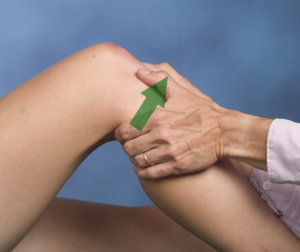 Poor Patient Positioning
The mistake: Rushing into a test without carefully positioning the patient. Misalignment or inadequate stabilization can change the mechanics of the test and produce misleading results. Here are 3 possible errors in the performance of a Lachman test:
Example A: Performed with the hip not properly stabilized may feel more “loose” than it actually is, leading to false positives for ACL tears.
Example B: Not recognizing the “drop back” of the tibia could miss a PCL tear that appears to present as too much anterior translation.
Example C: Flexing the knee to much such that the meniscus blocks anterior translation.
Solution: Slow down. Position the patient precisely and stabilize the limb or trunk as required. Small details matter.
-
 Overinterpreting a Single Test Result
The mistake: Using one positive test as definitive proof of a diagnosis.
Example: A positive Hawkins-Kennedy test is often interpreted as “shoulder impingement,” but this test alone has limited specificity and can be positive in multiple conditions.
Solution: Use clusters of tests combined with patient history and symptom behavior. One test = a clue. Multiple consistent findings = stronger evidence.
Here are the supporting metrics for clustering of the Hawkins-Kennedy test with various combinations.
-
Hawkins-Kennedy & Palm Up:
-
Sensitivity = 79%, Specificity = 49%; (+) PV = 45%; (-) PV = 81%
-
Hawkins-Kennedy & O’Brien:
-
Sensitivity = 87%; Specificity = 19%; (+) PV = 36%; (-) PV = 75%
-
Hawkins-Kennedy & Jobe Relocation:
-
Sensitivity = 81%; Specificity = 33%; (+) PV = 39%; (-) PV = 77%
-
O’Brien, Jobe Relocation & Hawkins-Kennedy:
-
Sensitivity = 96%; Specificity = 9%; (+) PV = 36%; (-) PV = 85%
-
Palm Up, O’Brien & Hawkins-Kennedy:
-
Sensitivity = 91%; Specificity = 16%; (+) PV = 37%; (-) PV = 77%
-
Palm Up, Jobe Relocation & Hawkins-Kennedy:
-
Sensitivity = 94%; Specificity = 27%; (+) PV = 41%; (-) PV = 89%
-
 Ignoring Reliability and Validity
The mistake: Relying on traditional tests without considering their diagnostic accuracy. Not all tests are equally supported by evidence.
Example: The anterior drawer test for ACL injuries has lower sensitivity compared to the Lachman test, meaning it often misses partial tears.
Solution: Stay current with literature on sensitivity, specificity, and likelihood ratios. Choose tests that are validated and reliable for the population with which you’re working.
-
Lachman Test:
-
Sensitivity = 63-99%, Specificity = 42-100%, (+) LR = 1.12-40.81, (-) LR = 0.02-0.83
-
Anterior Drawer Test:
-
Sensitivity = 22-95%, Specificity = 78-100%, (+) LR = 1.94-87.88, (-) LR = 0.09-0.74
-
 Applying Excessive Force
The mistake: Thinking “more force = more accuracy.” In reality, overly aggressive testing can cause unnecessary pain and muscle guarding that can skew results.
Example: An overly forceful valgus stress test may create discomfort even in a stable knee, leading to false positives.
Solution: Apply controlled, graded force. Respect tissue tolerance. Painful doesn’t always mean pathological. Bilateral comparisons can also provide a barometer for what is “normal” for each patient.
-
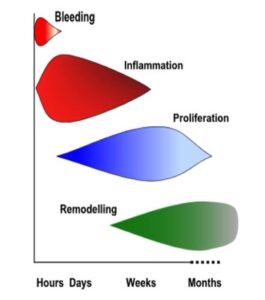 Appreciating Symptom Irritability
The mistake: Running through a battery of tests on highly irritable patients without considering how this may flare symptoms.
Example: Multiple impingement tests performed in sequence on an acute shoulder often aggravate pain and reduce the ability of the patient to relax for accurate assessment
Solution: Prioritize! Use the least provocative, most informative tests first, and stop if the patient’s irritability is escalating.
-
 Neglecting the Patient’s Story
The mistake: Jumping straight to special tests without listening completely to the patient’s history.
Example: Testing for hip pathology without asking about night pain, systemic symptoms, or prior cancer history risks missing red flags like metastasis. Not asking about back pain or referred lower extremity symptoms could result in missing important information.
Solution: Remember: history > test. Clinical tests refine, not replace, patient narratives.
Summary
Orthopedic tests are powerful clinical tools, but they are not foolproof. The most common mistakes clinicians make — poor positioning, overreliance on single results, ignoring evidence, or failing to get a complete history can undermine their value.
By refining technique, staying evidence-informed, and integrating findings into the bigger clinical picture, clinicians can avoid these pitfalls and provide safer, more accurate, and more effective care.
It’s not about performing every test, it’s about performing the right tests, in the right way, at the right time.
More cutting-edge orthopedic information can be obtained by subscribing to iOrtho+ PREMIUM Web App at https://iortho.xyz/ Subscription is only $9.99/year or $1.99/month. All updates are FREE with an active subscription.
If you would like to learn more about the Mobil-Aider orthopedic arthrometer to quantify joint mobility, please visit: https://iortho.xyz/products/